One of the biggest misconceptions in business is that growth simply means doing more of the same.
If you can manage five people, surely you can manage ten. If you can manage ten, then twenty shouldn't be much different. Hire more staff, buy a few more vehicles, win more work and keep moving.
In reality, that's rarely what happens.
Over the years, we've worked with trade businesses ranging from small family operations through to organisations employing hundreds of people. The interesting part is that the challenges don't fundamentally change - they simply become more visible and more expensive as a business grows.
When you're a small team, communication happens naturally. The owner knows every customer. The office knows where every crew is. If someone forgets something, it's usually solved with a quick phone call or a chat in the workshop. Information lives in people's heads because it can.
Those informal systems are often one of the strengths of a small business. They're fast, flexible and personal.
The problem is that they don't scale.
As the business grows, the owner can no longer speak to every employee every day. New office staff don't know the history behind every customer. Supervisors are responsible for multiple crews instead of one. Suddenly there are hundreds of photos being taken every week, dozens of jobs in progress and countless conversations happening across phone calls, text messages, emails and WhatsApp.
Nothing has actually gone wrong.
The business has simply reached the point where people can no longer remember everything.
That's when the symptoms start appearing.
Customers call for an update and nobody is quite sure who last attended site. Materials arrive before the job is ready. Variations are agreed to on site but never make it back to the office. Timesheets are submitted late, invoices are delayed, and office staff spend their afternoons chasing information instead of supporting customers.
From the outside, it can look like the business has become disorganised.
More often than not, the opposite is true.
The business has become successful enough that the systems which helped it grow are no longer sufficient.
This is a transition we've seen time and time again. Businesses don't suddenly become inefficient because they hired another ten people. They become inefficient because the way information flows through the business hasn't evolved at the same pace as the business itself.
The businesses that continue to grow successfully recognise this early.
They stop relying on memory and start relying on process.
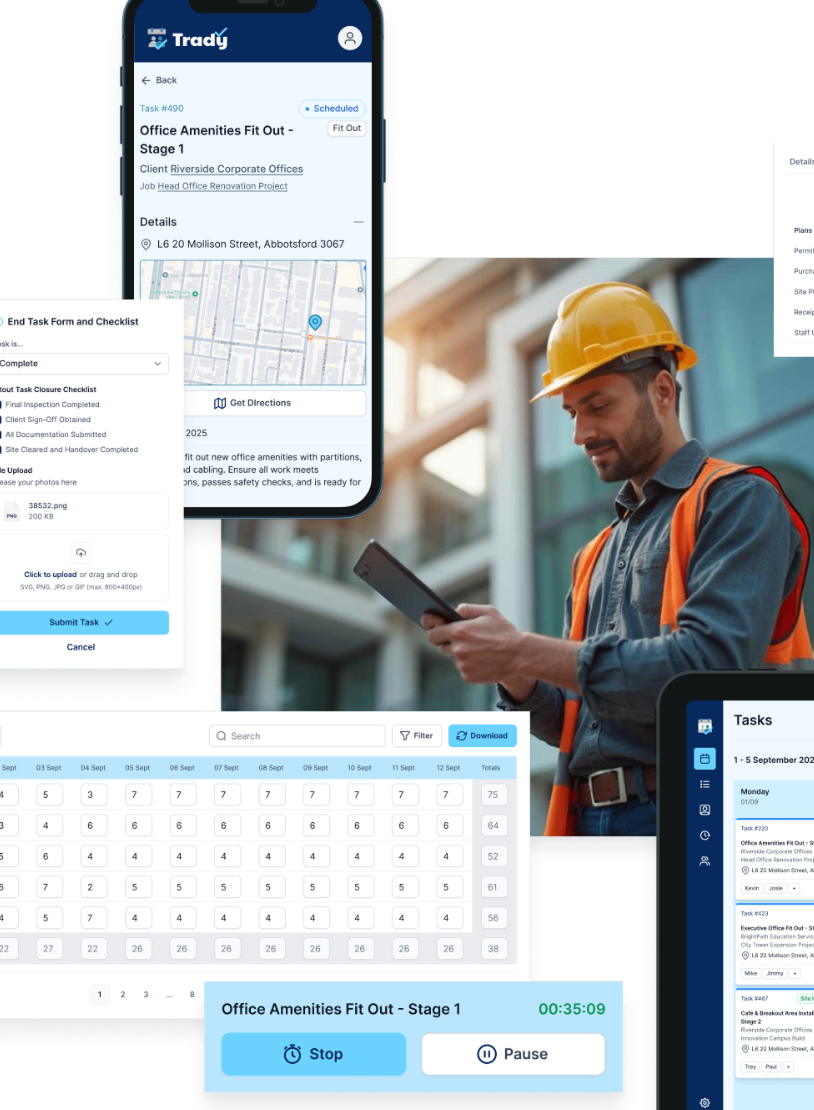
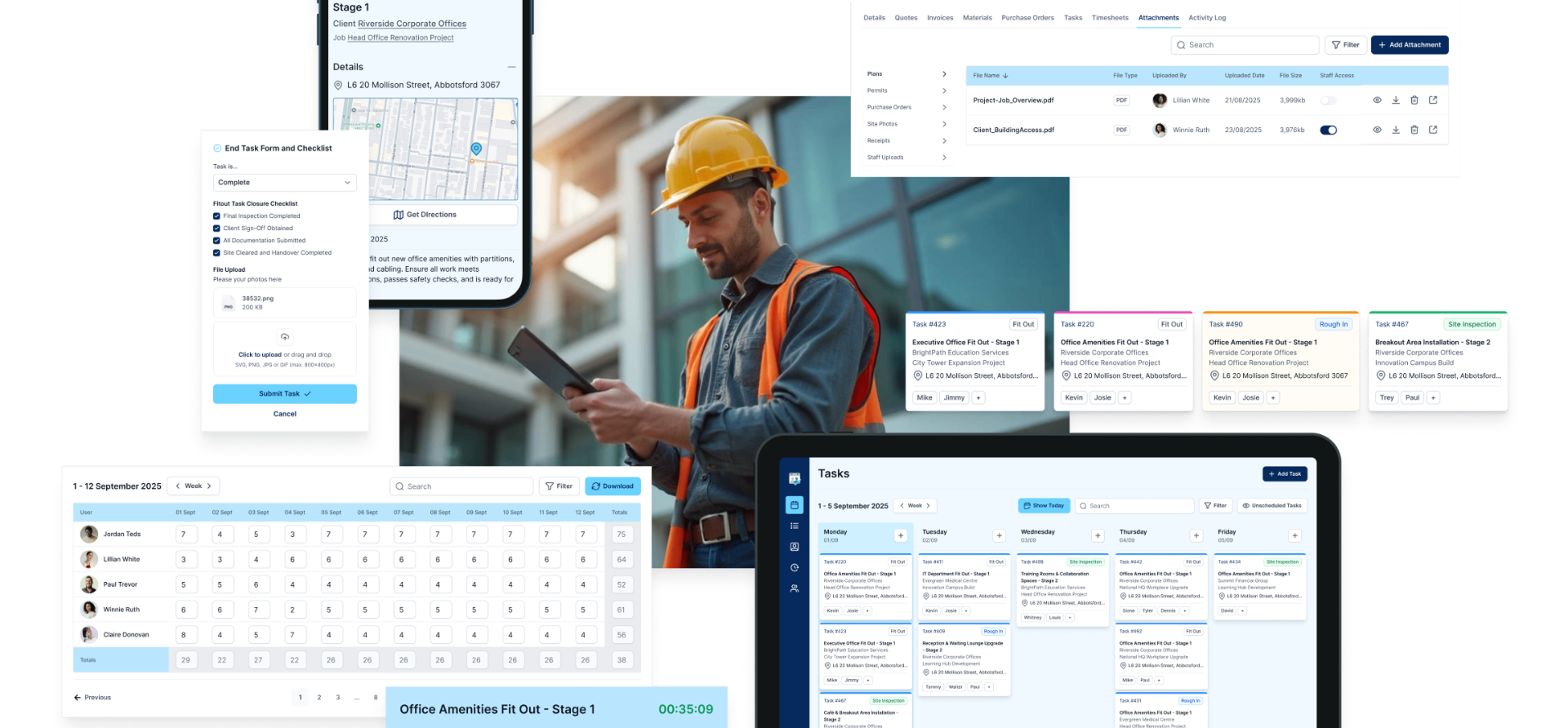
Every job has a defined workflow. Every document belongs to a specific job. Photos, notes, forms and communication are captured in one place rather than scattered across individual phones and inboxes. The office, field staff and management all work from the same information, giving everyone confidence that they're making decisions based on what's actually happening rather than what they think is happening.
This is one of the biggest lessons we've learnt after more than a decade building custom software for some of Australia's largest trade businesses.
Despite the size of those organisations, the challenges were surprisingly familiar. Better visibility. Better communication. Better accountability. Better planning.
The difference wasn't that they employed hundreds of people. The difference was that they had built systems that allowed hundreds of people to work together consistently.
That experience became the foundation for Trady.
We didn't set out to build another job management application packed with features. We set out to package the operational thinking we've developed through years of enterprise software projects into a platform that growing trade businesses could actually afford.
Because the businesses that grow from five people to fifty don't do it by working harder.
They do it by building better systems.